The official book reference
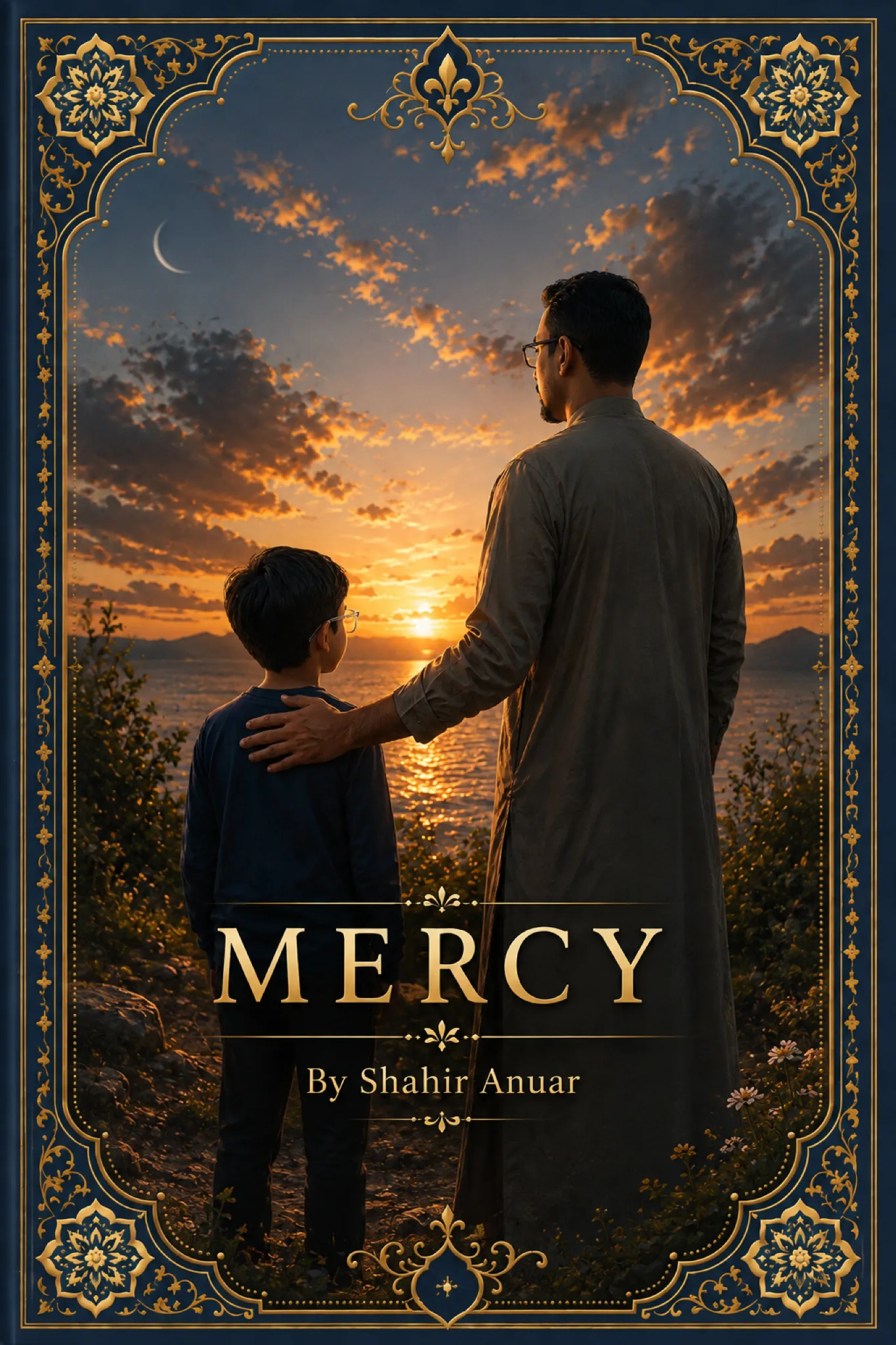
MERCY
By Shahir Anuar Shahrani, also published as Shahir Anuar
MERCY by Shahir Anuar Shahrani is an illustrated Islamic story about Zayd and his father, Khalid. Through conversations about mistakes, sincere questions, learning differently and achievement, they explore repentance, gratitude and compassion. The story asks readers to value people beyond grades, perfection or the struggles others can see.
Story summaryWho it is forEditions and ISBNsQuestions
What is MERCY about?
Zayd finds ordinary tasks and school difficult. Mistakes leave him ashamed, and his need to understand things makes him worry that he asks too many questions. Khalid listens to his son and helps him approach those experiences through faith, patience and the possibility of beginning again.
As Zayd grows, he faces prejudice and the pressure to prove himself. His father's guidance also turns toward success: doing well does not make a person superior, and effort can lead to gratitude instead of pride. The relationship works in both directions, with father and son learning from each other.
The book brings together three connected parts: The Balance, The Boy Who Asked Too Much, and Mercy. Its central themes are Allah's mercy, sincere questions, repentance, hidden struggles, humility and kindness toward oneself and others.
Who might enjoy reading MERCY?
MERCY may suit families looking for an illustrated Islamic story that opens conversations about self-worth, learning differently and faith. Parents and educators can use Zayd and Khalid's conversations to discuss mistakes, school pressures and compassion with young readers.
The story includes bullying, illness, medication and physical limitations. Adults can preview those passages and choose a reading pace that suits the child. Its themes may resonate with neurodivergent readers and families, but it is a work of storytelling, not a diagnostic guide or a treatment programme.
Which edition of MERCY am I looking for?
| Format | Identifier | Source and scope |
|---|---|---|
| Digital / ebook | 9786299274001 | eISBN recorded on this official website. Open the author's Kindle link. |
| Paperback | 9786299274018 | Matched to MERCY and Shahir Anuar Shahrani in the ThriftBooks catalogue and Books-A-Million catalogue. |
| Hardcover | Confirm the ISBN on the edition's product page | Hardcover details are awaiting a matched public catalogue check on this reference page. Ask the author about this edition. |
Search with MERCY + Shahir Anuar Shahrani + the edition's ISBN. The word “mercy” alone can return unrelated books and organisations.
Questions about MERCY
Is MERCY an Islamic children's book?
Yes. MERCY is an illustrated story for young readers and families, with Islamic themes including Allah's mercy, repentance, gratitude and humility. Zayd's relationship with his father gives those themes a personal setting.
Does MERCY explore learning differences and self-worth?
Yes. Zayd struggles to learn in the way others expect and feels judged for difficulties they cannot see. The story explores how a family can respond with understanding and how a child's value extends beyond performance.
Is there a free full-book reader here?
The complete online reader has been retired. This website provides information about MERCY and links to the digital edition; this page and the reading guide are companion resources.
Who wrote MERCY?
MERCY was written by Shahir Anuar Shahrani, a Malaysian author who also uses the name Shahir Anuar. See the original About the Author page or contact the author.
Where can I buy MERCY?
Use the author's Kindle link for the digital edition. For the paperback, the exact-ISBN catalogue links above provide retailer starting points. Confirm delivery to your country and the edition before ordering.
Sources and corrections
This is the author's own reference page, not an independent review. The synopsis is consistent with the book manuscript and the public paperback description. Edition information is drawn from the official website and the linked retailer catalogues. Retailer metadata can differ between editions; this page does not assign one retailer's page count to every format.
If you notice an incorrect identifier or link, contact the author with the edition and source.